
Why Did Horses Need to Be Drenched?
One of the major reasons for administering liquid treatments was to deal with digestive problems and other illnesses.
Colic, for example, is a broad term for abdominal pain in horses and can have many different causes. Historically, treatments could include substances intended to lubricate the digestive tract or encourage movement through the intestines.
Older veterinary sources and museum collections document the use of drenching instruments for administering substances such as castor oil and other medications.
For farmers and veterinarians working before modern diagnostic and treatment methods, being able to administer a treatment to a large animal was an important practical skill.
The Ingenious Design Behind the Tool
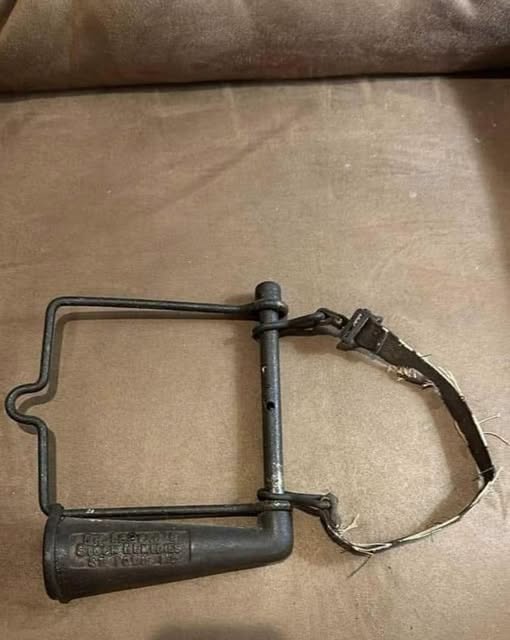
The fascinating thing about an antique horse drencher is that its shape wasn’t arbitrary.
Its various components were designed around the physical challenges of treating a large animal.
Depending on the model, a drencher might feature:
- A metal reservoir for holding a treatment
- A long or curved delivery tube
- A plunger or pumping mechanism
- A bit or mouthpiece
- A handle, ring, or hook
- Straps or other fittings
The purpose was to allow the operator to deliver a substance into the horse’s mouth in a controlled manner.
Historical veterinary instruments demonstrate just how much ingenuity went into solving these problems before modern equipment became available. The Science Museum Group, for example, has a later horse drencher from Australia specifically catalogued for administering powdered substances.