

The Cable: The cable is not just a wire. It contains tiny chips for authentication and data/power management, especially for USB-C. Fraying, kinks, or exposed wires are not just cosmetic issues; they can cause short circuits, irregular current flow, and heat buildup at the point of damage. Inspect cables regularly and replace them at the first sign of wear.
The Device Itself: A phone with a swollen battery—indicated by a screen that is lifting up, a casing that is bulging, or a device that no longer lies flat on a table—is in a critical state of failure. Do not charge it. Do not puncture it. Place it in a non-flammable container (like a metal pot) away from combustibles and contact the manufacturer or a professional recycler immediately. A swollen battery is under immense internal pressure and is highly unstable.
Pillar 2: The Right Place – Engineering Your Environment
Your home should have designated “charging stations.” These are not complex setups but intentional locations that meet key criteria:
fact, Non-Flammable Surface: A bare nightstand, a kitchen counter, a desk. The goal is maximal heat dissipation and zero fuel.
Adequate Ventilation: Avoid charging inside closed drawers, cabinets, or tightly packed bags. Airflow carries heat away.
Away from Direct Sunlight and Heat Sources: Keep charging stations away from radiators, heating vents, and sunny windowsills.
Consider a Dedicated Charging Station: Products exist that are essentially non-flammable trays or stands with cable management. They psychologically and physically reinforce the safe charging zone. A simple ceramic plate or tile can also serve as an excellent, heat-resistant charging pad.
Room-by-Room Safety Blueprint:
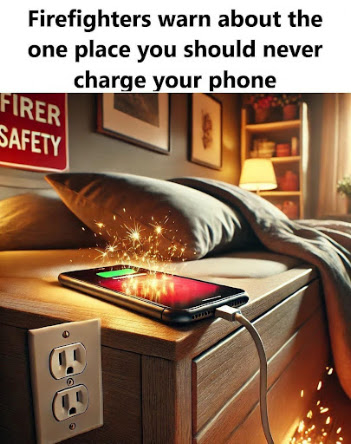
Bedroom: The nightstand is the only acceptable location. Ensure the phone is at least 3 feet from the bed and any bedding. If you must charge overnight, make this your non-negotiable rule.
Living Room: Use a side table or media console. Never the sofa, armchair, or carpet.
Kitchen: The counter is ideal, but keep it well away from the sink and cooking areas to avoid steam, grease, and water.
Home Office: The desk is perfect. Practice good cable management to avoid tripping hazards and damage.
Car: Use a manufacturer-approved car charger plugged into the 12V port. Do not leave the phone charging unattended on a hot seat; use a vent mount if using for navigation to keep it cool.
Pillar 3: The Right Habits – Cultivating Conscious Practice
Avoid the “100% Overnight” Habit: Modern phones and BMS are good at stopping charge at 100%, but keeping a battery at peak voltage for prolonged periods (like 8 hours) accelerates long-term chemical degradation. If possible, charge during the day, or use software features that delay full charge until just before you wake up.
Unplug When Not in Use: This saves energy and removes the device from the active power grid, eliminating any risk from the charger itself.
Charge Before It Dies: Frequent, shallow discharges (between 20-80%) are less stressful on a Li-ion battery than deep, 0-100% cycles.
Listen to Your Phone: If it becomes uncomfortably hot during charging, stop immediately. Unplug it, move it to a cool surface, and let it cool down. Investigate the cause: a faulty charger, a demanding app running in the background, or a poor charging environment.
Educate Your Household: Safety is a collective effort. Ensure every member of the family, especially children and teenagers, understands the “why” behind the rules. Show them pictures of battery swell and fire damage. Make “bed = no charging” as fundamental a rule as “look both ways before crossing the street.”
continued on the next page