
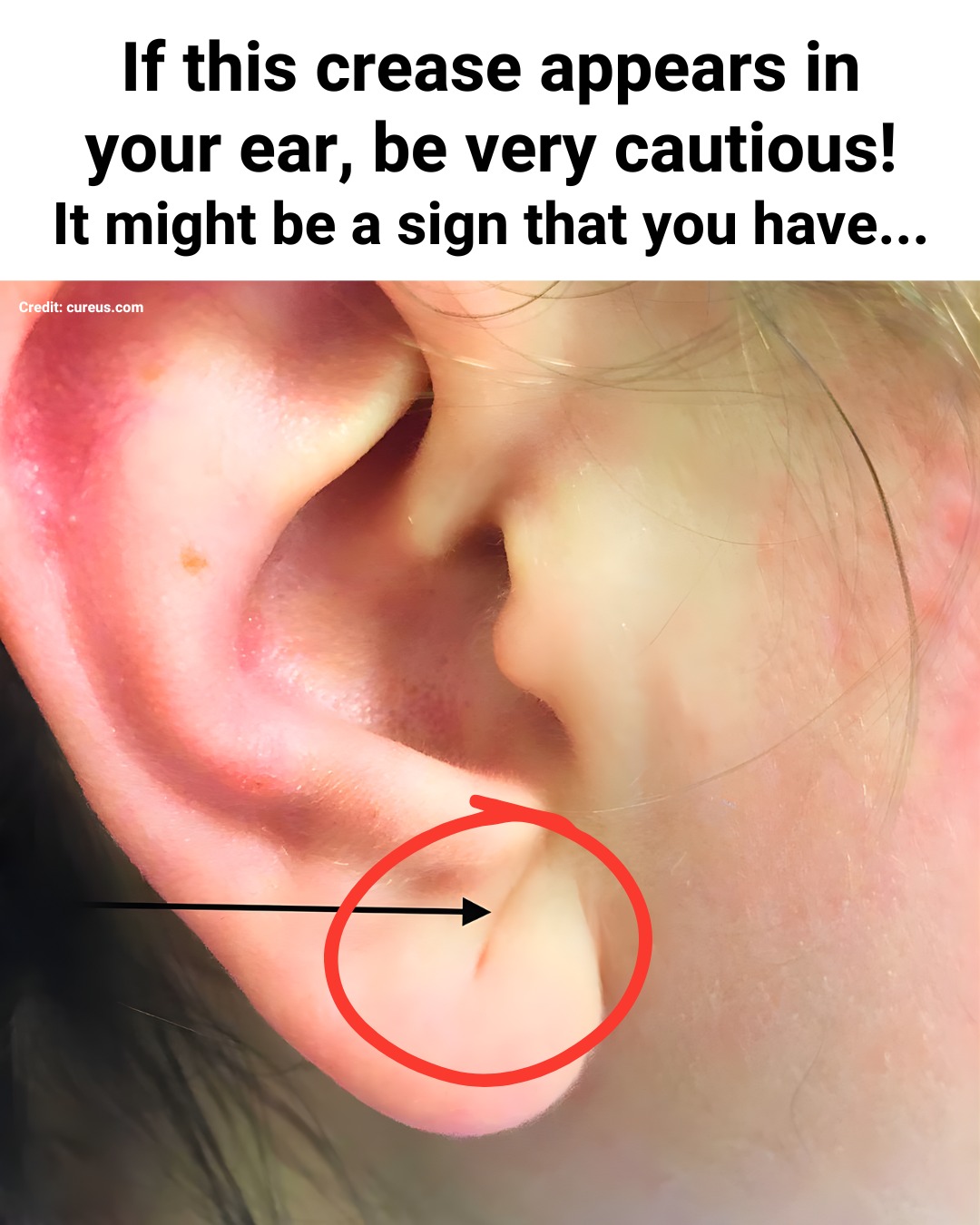
Doctors do not yet agree on a single cause, but leading theories include:
-
Microvascular ischemia: Reduced blood supply to the earlobe’s tiny vessels
-
Systemic vascular aging: Similar structural changes occurring in arteries throughout the body
-
Shortened telomeres: Research suggests people with the crease may show signs of accelerated biological aging
-
Loss of elastin and collagen: Changes also seen in aging or diseased blood vessels
Together, these theories point toward Frank’s Sign being a marker of vascular health, rather than a simple effect of aging alone.
Does Age Matter?
Yes. Frank’s Sign becomes more meaningful in people under 60, where normal aging is less likely to explain the crease. In older adults, its significance is reduced because earlobe changes are more common with age.

Different Patterns, Different Risk
The appearance of the crease can vary, and clinicians sometimes consider:
-
Partial vs. complete crease
-
Shallow vs. deep
-
Unilateral vs. bilateral
A deep, complete crease on both earlobes may raise more concern than a faint, partial crease on one side.
Continued on next page//

