
The Green Potato Predicament: What Those Mysterious Spots Really Mean (And How to Safely Save Your Sunday Mashed Potatoes)

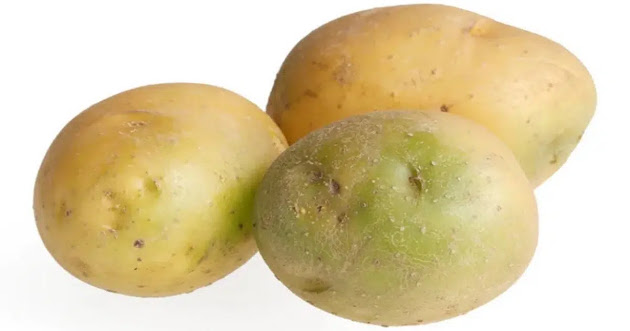
🔪 To Eat or to Toss? The Gentle Decision Guid
You don’t need to throw away an entire bag of potatoes just because one has a little green on it. Here is a practical, resourceful guide to deciding whether to save or compost your spuds.
|
The Condition of the Potato
|
What It Means
|
The Gentle Solution
|
|---|---|---|
|
Tiny, superficial green spots
|
The solanine is only concentrated right on the very surface of the skin.
|
Save it! Use a vegetable peeler to peel the potato a little thicker than usual, or use a knife to cut away the green spots. The white/yellow flesh underneath is perfectly safe.
|
|
Large green patches, but the potato is firm
|
The greening has gone a bit deeper, but the potato is still healthy and crisp.
|
Save it with care! Cut away the green areas generously, ensuring you remove at least a quarter-inch of flesh below the green skin. If the remaining flesh tastes bitter when raw, toss it.
|
|
The entire potato is green
|
The solanine has likely permeated the entire tuber.
|
Compost it. No amount of peeling will make this safe. It’s not worth the risk of a stomach ache.
|
|
Green and shriveled/wrinkled
|
The potato is old, dehydrated, and has high concentrations of solanine.
|
Compost it. The texture will be terrible anyway, and the toxin levels are too high.
|
|
Green sprouts (the “eyes”)
|
The sprouts themselves contain high levels of solanine.
|
Save it! Use the “eye” of a potato peeler or a small paring knife to dig out the sprouts and the base they are growing from.
|
🥔 Grandma’s Wisdom: How to Prevent the “Sun Tan”
Our grandparents didn’t have modern supermarkets with bright lights; they had root cellars. They understood that potatoes need a very specific environment to stay happy, pale, and delicious. Here is how you can store your potatoes to keep them perfectly fresh for weeks.
✅ Keep it Dark: Light is the enemy of the pale potato. Store them in a dark cupboard, a pantry, or a basement. If you buy them in a plastic bag, transfer them to an opaque container or a paper bag immediately. ✅ Keep it Cool, but Not Cold: Potatoes love temperatures between 45°F and 55°F (7°C – 13°C). A cool pantry is perfect. Never store raw potatoes in the refrigerator! The cold temperatures cause the potato’s starches to convert into sugars, which will make your mashed potatoes taste strangely sweet and turn them dark when cooked. ✅ Let Them Breathe: Don’t keep them sealed in a plastic bag. Potatoes need air circulation. A paper bag, a mesh sack, or a ventilated cardboard box is ideal. ✅ Keep Them Away from Onions: This is an old kitchen rule that is scientifically true! Onions emit gases that encourage potatoes to sprout and spoil faster. Keep them in separate corners of the pantry.
Doctors reveal that eating eggs in the morning causes …See more

The Hidden Car Safety Feature Many Drivers Overlook — And Why It Matters More Than You Think see…

7 Silent Ailments That Appear a Year Before De.ath
Dump cabbage and these ingredients in slow cooker for a meal guests will crave over and and over
You cut open a watermelon and saw cracks? Stop eating it immediately! Here’s what it means!