
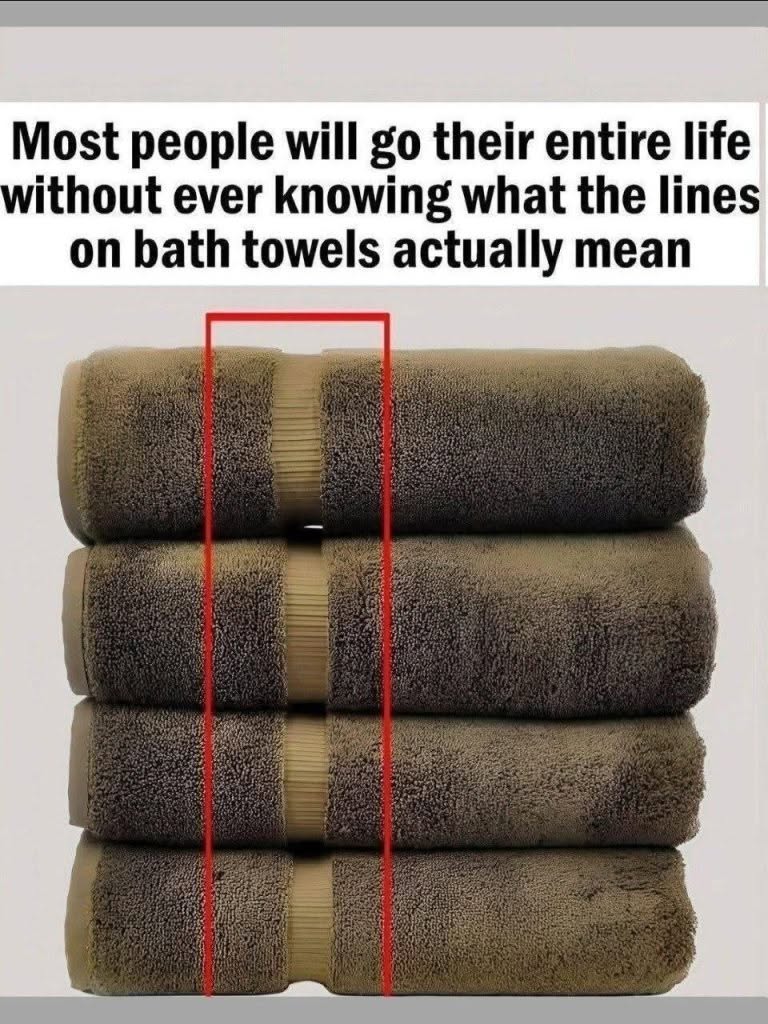
Look closely at the very edge. Do you see tiny, evenly spaced holes or a ladder-like pattern where the fabric seems to be pulled together? That’s a hemstitch.
What it means: This is a classic finishing technique where groups of threads are drawn together and bound. It’s traditional, elegant, and often associated with luxury linens.
Why it matters: Hemstitching is labor-intensive. It’s a sign of craftsmanship. However, it can be delicate. If you’re rough with your laundry (looking at you, heavy-duty cycle enthusiasts), hemstitched edges may snag or unravel faster than a simple folded hem. It’s beautiful, but it requires gentle care.
3. The Solid Band: The Modern Minimalist
Many contemporary towels feature a solid, wide band of color at the ends, distinct from the main body of the towel.
What it means: This is usually a design choice driven by trends. Think spa-like aesthetics, hotels, or modern home decor.
Why it matters: While mostly aesthetic, these bands can sometimes indicate a change in weave density. Manufacturers might use a tighter weave for the band to create a crisp contrast. Be aware: if the band is made of a different material (like cotton vs. polyester blend), it might dry at a different rate than the rest of the towel, leading to slight warping over time.
4. The “No-Line” Edge: The Everyday Workhorse
Some towels have no distinct border at all—just a simple folded-over hem sewn down.
What it means: Efficiency. This is the standard for mass-market, budget-friendly towels.
Why it matters: There’s nothing wrong with this! In fact, these edges are often the most durable because there are no intricate weaves to snag. If you want a towel that can withstand high-heat drying, bleach, and years of heavy use without fuss, the simple hemmed edge is your best friend.