
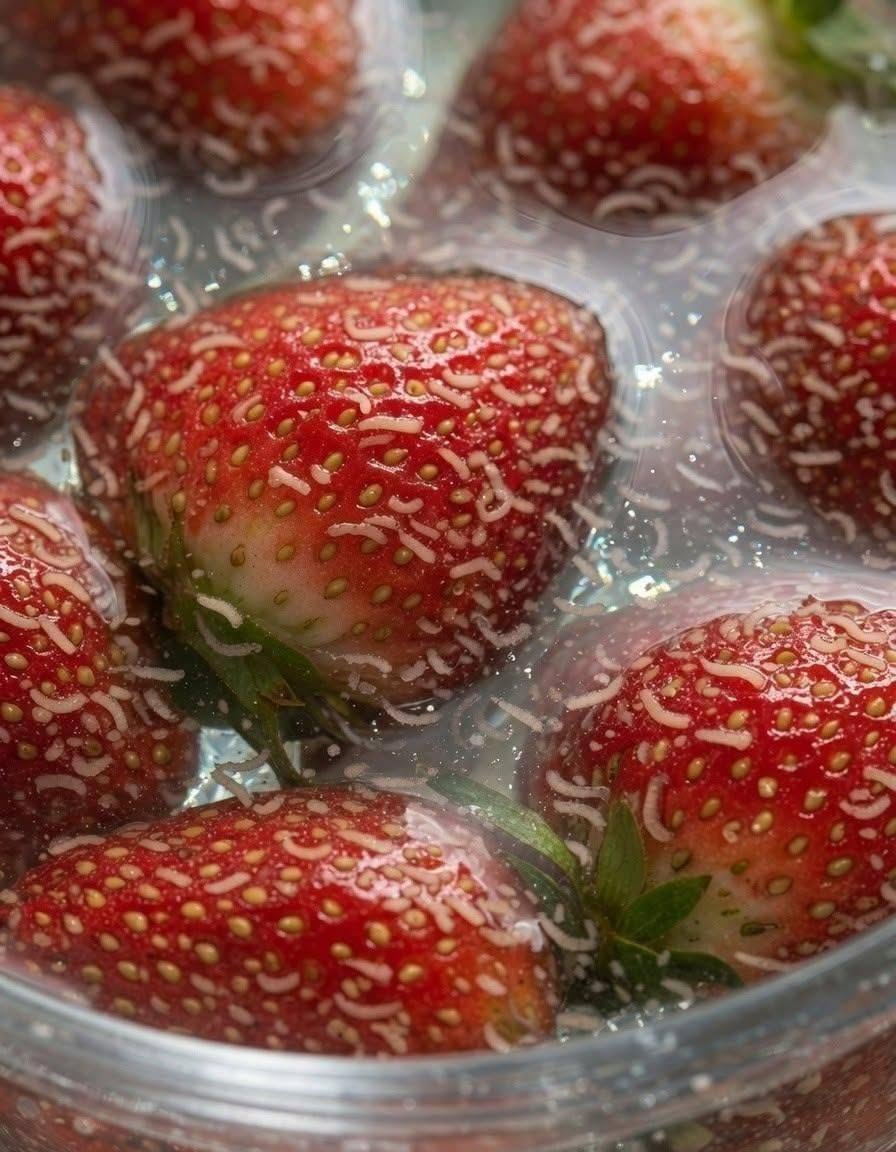
Are the Larvae Dangerous?
Accidentally consuming a small fruit-fly larva is generally not expected to cause harm in a healthy person. These larvae are not known to live or reproduce inside the human body.
However, their presence may indicate that the fruit has been damaged and could spoil more quickly. Insect-damaged berries may provide openings where yeasts, molds, or bacteria can grow, particularly if the fruit has become soft, leaking, fermented, or poorly refrigerated.
For this reason, inspect the entire berry rather than relying only on the presence or absence of visible larvae.
When Strawberries Should Be Discarded
Throw the berries away if you notice:
- Visible mold
- A sour, alcoholic, or fermented smell
- Leaking juice combined with extensive softness
- Dark, sunken areas or widespread decay
- A slimy surface
- Significant insect damage throughout the container
People who are pregnant, very young, elderly, or immunocompromised may wish to be particularly cautious with damaged or questionable produce.
How to Wash Strawberries Properly
For routine cleaning, rinse strawberries thoroughly under cool running water shortly before eating them.
- Inspect the berries and discard any that are moldy, leaking, or badly damaged.
- Place the remaining fruit in a clean colander.
- Rinse gently under cool running water.
- Rub the surface lightly with clean fingers where practical.
- Drain and dry with clean paper towels or a freshly washed kitchen towel.
Do not wash produce with dish soap, bleach, or household disinfectants, as these products are not intended to be consumed.