
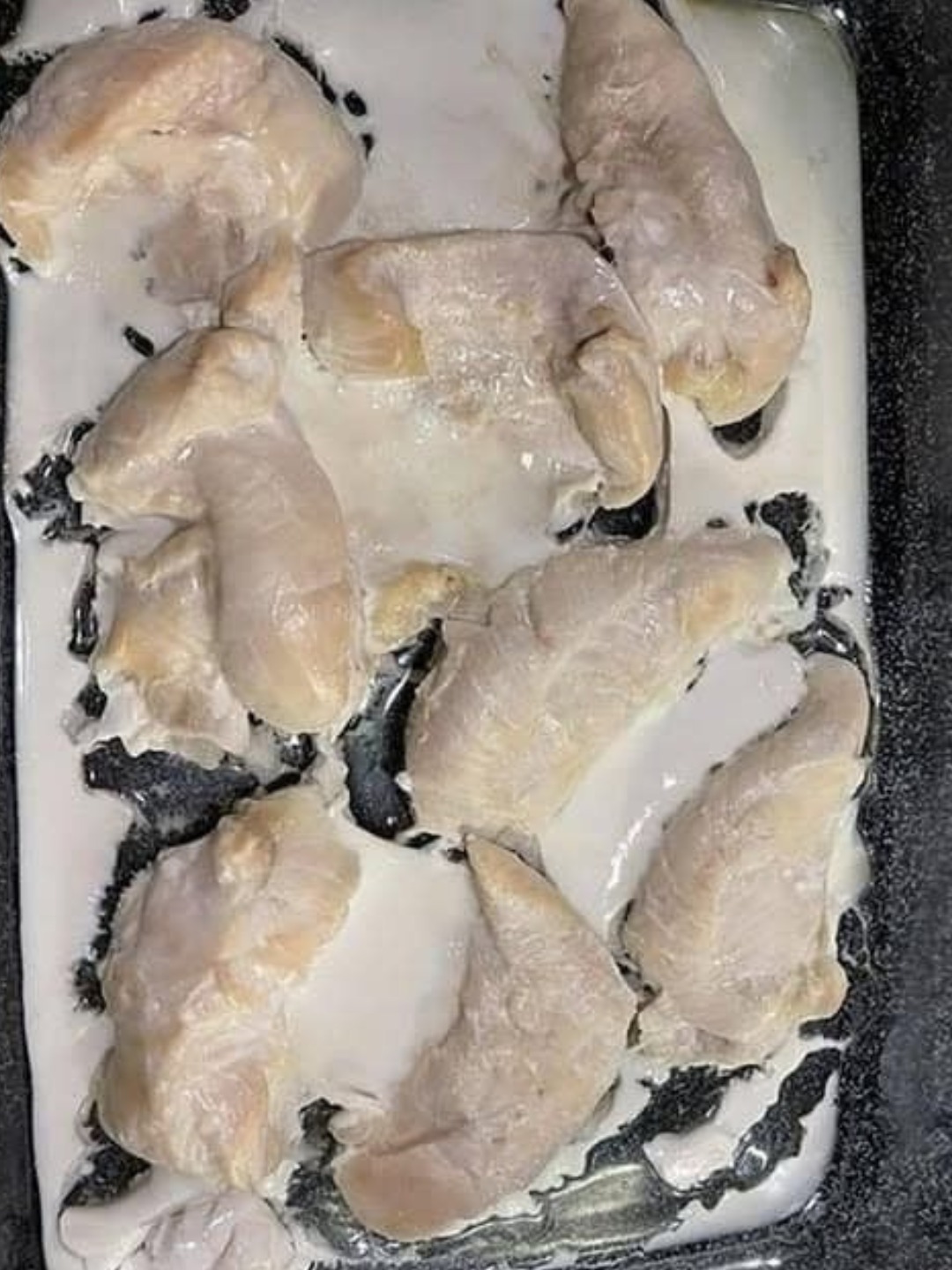
This phenomenon is most noticeable in:
- Chicken breasts
- Boneless, skinless cuts
- Boiled or poached chicken
It’s not exclusive to chicken similar protein discharge occurs in fish and other meats but it’s more visible due to the light color of poultry.
 Why Does It Happen? The Science Behind the Goo
Two main things happen when you cook chicken:
1. Protein Denaturation
Heat causes the structure of proteins like albumin and myosin to change shape much like how eggs turn from clear to white when cooked.
This process starts around 140°F (60°C) , and once it begins, those proteins begin to separate from the meat and rise to the surface.
2. Moisture Loss
As chicken cooks, the muscle fibers contract , squeezing out water and dissolved proteins.
In moist cooking methods like simmering, boiling, or baking, the escaped moisture sits on top of the chicken, making the goo more visible.
In dry-heat methods like grilling or pan-searing, the moisture evaporates quickly so the goo is less noticeable.
 Is This Goo Dangerous or a Sign of Spoilage?
Absolutely not.
The white discharge is a natural byproduct of cooking and completely safe to eat. It’s just coagulated protein and juices , not pus, fat, or any kind of toxin.
However, if you notice these signs before cooking, be concerned:
- Strong foul odor
- Slimy texture (before cooking)
- Discoloration (gray, green, or yellow tones)
If your chicken shows any of these signs before cooking, it could be spoiled and should be discarded.
But during cooking? That goo is perfectly normal.
Continued on next page//
 How to Minimize the Goo for Better Presentation
While the goo is harmless, it can make your dish look less appetizing especially if you’re serving guests or prepping meal prep for social media.
Here are practical ways to reduce the appearance of albumin and keep your chicken looking clean and professional:
1. Brine Your Chicken Before Cooking
A simple saltwater brine helps chicken retain moisture and reduces protein leakage during cooking.
 How to Brine:
- Mix 1 quart of water with 2–3 tablespoons of salt.
- Soak chicken for 20–30 minutes.
- Pat dry before cooking.
You can also use buttermilk, yogurt, or vinegar-based marinades for similar effects.
2. Pat Dry Before Cooking
Excess moisture on the surface of chicken leads to more albumin release. To avoid this:
- Use paper towels to gently pat chicken dry before cooking
- Letting chicken sit at room temperature for 15–20 minutes before cooking can also help even out moisture distribution
This step makes a big difference in presentation especially when searing, roasting, or air-frying.
Continued on next page//

