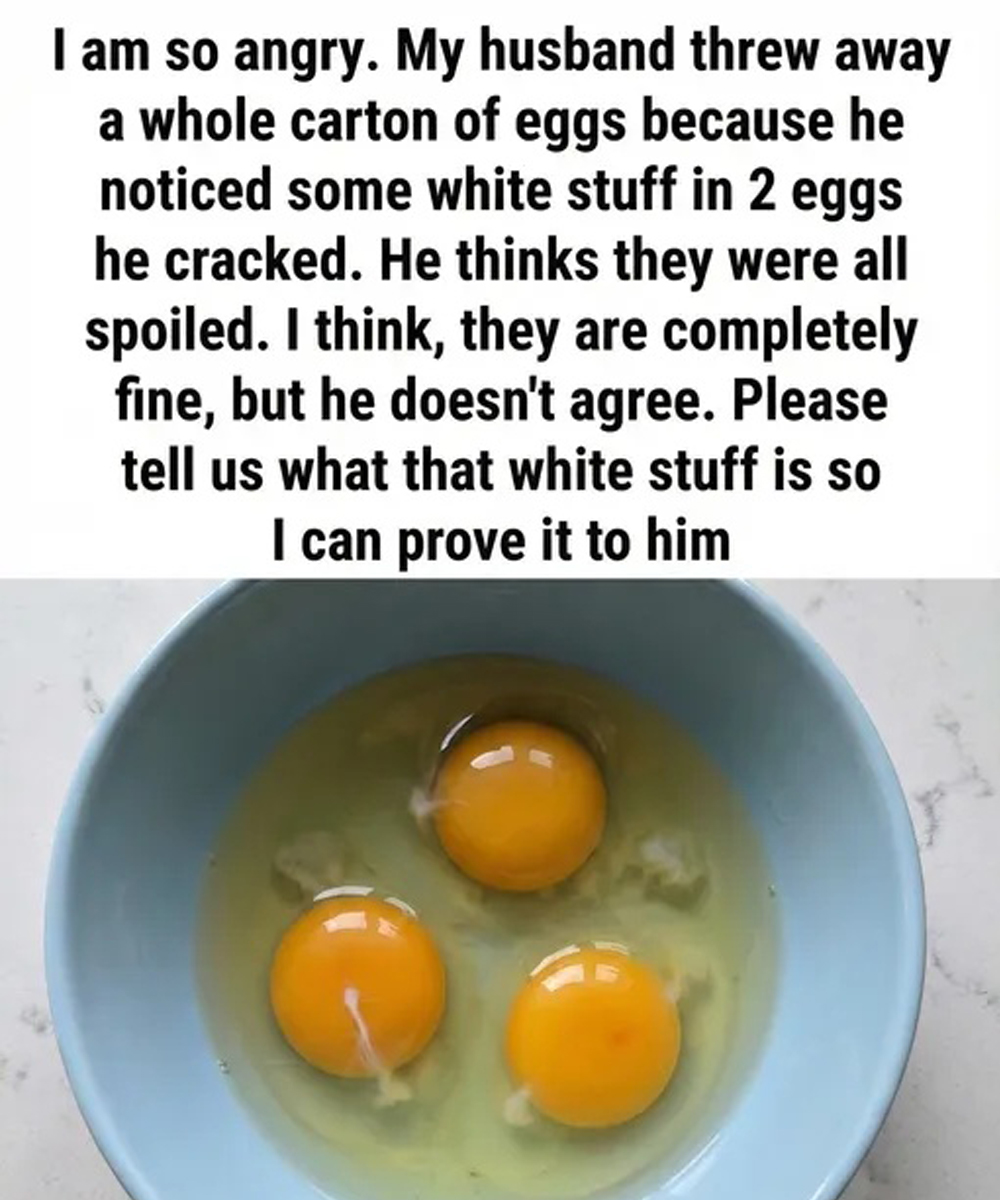
During cooking—whether frying, scrambling, or baking—it blends right in and essentially disappears.
There’s no need to remove the chalaza unless you’re making dishes that require an exceptionally smooth consistency, such as custards or delicate sauces.
Otherwise, leaving it in won’t affect the flavor or quality of your food.
Knowing what the chalaza is can make cooking feel easier and more reassuring, turning something that looks unusual into a reminder of how naturally and efficiently food is formed.
The next time you see that white strand in an egg, you’ll recognize it not as a defect, but as a sign of freshness and thoughtful design.