
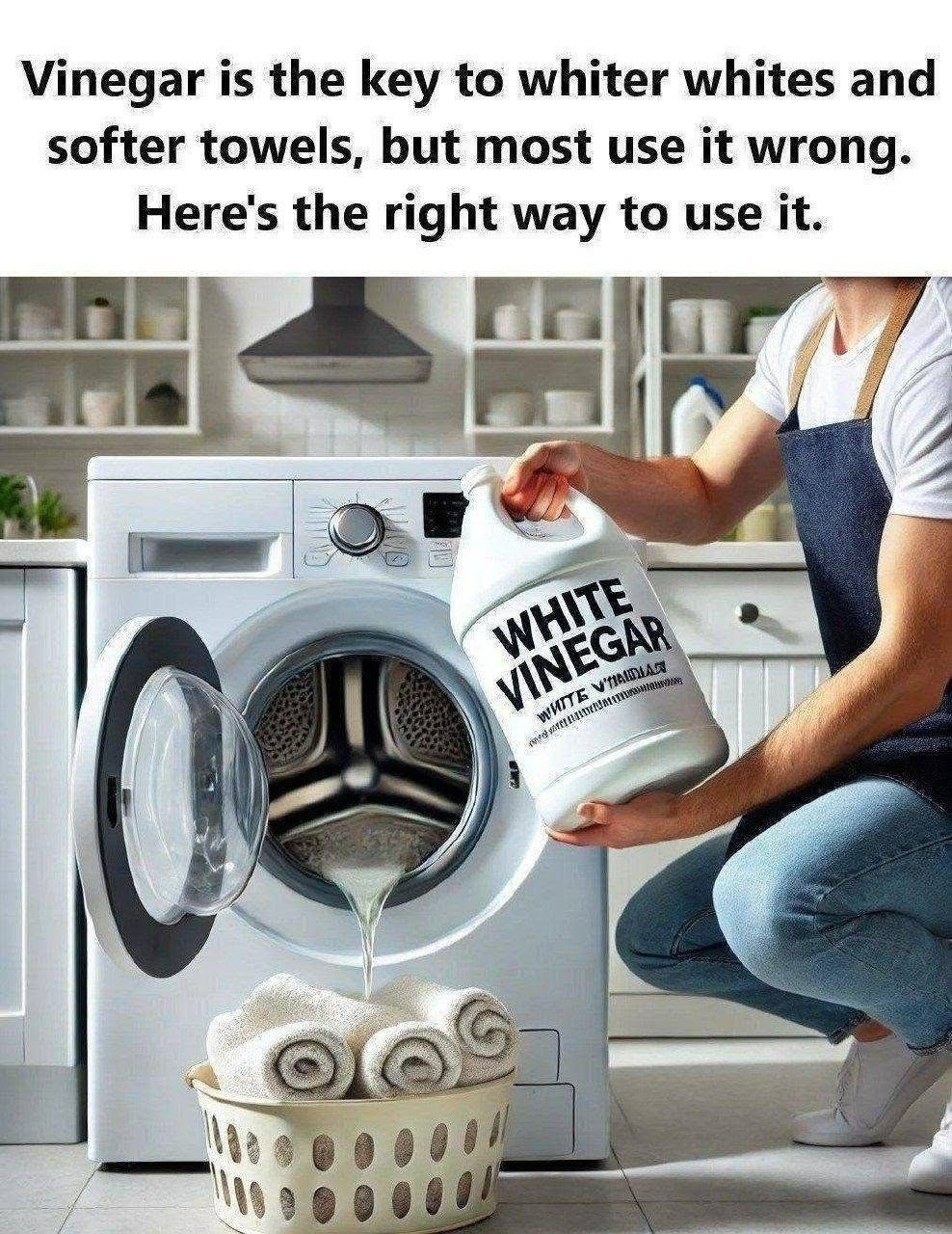
- Modern washing machines have a dedicated compartment for fabric softener—this releases vinegar during the final rinse, after detergent has done its job.
- This ensures vinegar rinses away residue, softens fibers, and leaves zero vinegar smell (it evaporates completely!).
🌿 No dispenser? Wait until the final rinse cycle, then pour ½–1 cup directly into the drum.
🧼 How to Use Vinegar for Specific Laundry Goals
📌 For Whiter, Brighter Whites
-
- Add 1 cup white vinegar to the rinse cycle
- Do NOT mix with bleach—creates toxic chlorine gas
- Pair with: Sun-drying (UV rays naturally whiten!) or ½ cup baking soda in the wash cycle only (not with vinegar!)
📌 For Softer, Fluffier Towels
-
- Use ½ cup vinegar in the rinse cycle
- Stop using commercial fabric softeners—they coat fibers with waxy chemicals that trap odors and reduce absorbency
- Strip towels monthly: Wash with hot water + 1 cup vinegar (no detergent) to remove buildup
📌 For Odor Removal (Gym Clothes, Diapers, Pet Bedding)
-
- Soak in 1 gallon water + 1 cup vinegar for 30 minutes before washing
- Add vinegar to rinse cycle to prevent odor recurrence
⚠️ What NOT to Do (Common Myths Busted)
|
Myth
|
Truth
|
|---|---|
|
“Vinegar damages washing machines”
|
False! It’s safe for hoses and seals in moderation (1–2x/week).
|
|
“Vinegar smells stay on clothes”
|
No—vinegar fully rinses out. If you smell it, you didn’t rinse enough.
|
|
“Vinegar + baking soda = super cleaner”
|
They cancel each other. Use baking soda in wash, vinegar in rinse—never together.
|
|
“All vinegar types work”
|
Only white distilled vinegar (5% acidity). Apple cider or wine vinegar can stain!
|
💡 Pro Tips for Laundry Success
Continued on next page//

