
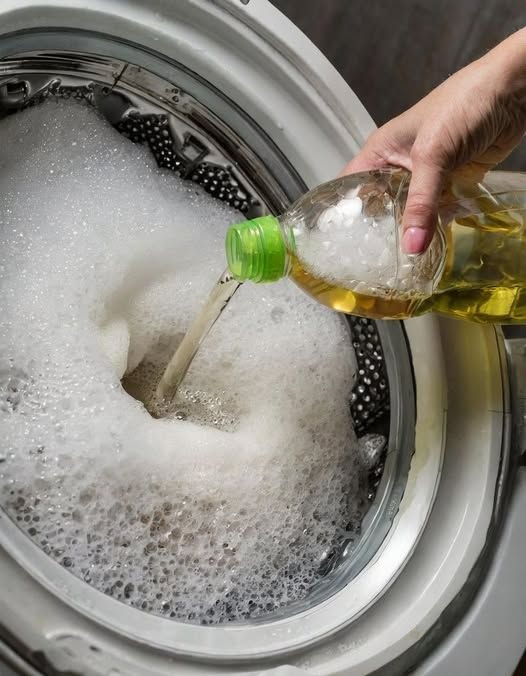
❌ The Big Mistake Everyone Makes (And How to Avoid It)
Myth: “Just pour vinegar into the detergent dispenser or dump it on clothes at the start of the wash.”
Reality: This drastically reduces its effectiveness—and can even set stains or damage fibers.
🚫 Why It’s Wrong:
- Vinegar is acidic (pH ~2.5), while most detergents are alkaline (pH 9–10).
- When mixed directly, they neutralize each other, canceling out cleaning power.
- Pouring vinegar on fabrics at the beginning can lock in odors or stains before they’re fully lifted.
✅ The Right Way:
Add vinegar ONLY during the rinse cycle—never with detergent.
This ensures:
- Detergent fully breaks down dirt and oils first
- Vinegar then softens fibers, removes residue, and neutralizes odors without interference
✅ How to Use Vinegar in Laundry: Step-by-Step Guide
🧺 For Whiter Whites
- Wash as usual with your regular detergent (add oxygen bleach like OxiClean for extra whitening—never mix with vinegar!).
- During the final rinse cycle, add ½ to 1 cup of distilled white vinegar directly to the drum or use the fabric softener dispenser (it’s safe!).
- Result: Brighter whites, no gray cast, and zero chemical buildup.
💡 Tip: For yellowed collars or underarms, pre-soak in a mix of 1 cup vinegar + 1 gallon warm water for 30 minutes before washing.
🛁 For Softer, Fluffier Towel
Towels turn stiff because detergent and fabric softener residue coat the fibers, blocking absorbency.
Fix it:
-
-
- Wash towels without fabric softener (it’s the #1 cause of stiffness!)
-
- Add 1 cup vinegar to the rinse cycle
- Dry on low heat—no dryer sheets!
🌟 Bonus: Vinegar helps eliminate mildew smells from damp gym clothes, swimwear, and bath mats.
Bathroom furniture

